20-hour Healthcare: Administration Safety Program
Tailored for healthcare administrators and support leaders, this program enhances awareness of crucial workplace safety topics that impact staff and operations. It serves as an excellent resource for professionals involved in managing policies, procedures, and personnel, all while fostering safer healthcare settings and addressing employee training requirements.
$89.00
SPECIFICATIONS
This program includes the following courses:
- 105 Hazard Communication: Basic
- 107 Emergency Action and Fire Prevention Plans
- 108 Personal Protective Equipment: Basic
- 114 Walking-Working Surfaces and Fall Protection
- 115 Electrical Safety for Employees: Basic
- 144 Introduction to OSHA
- 175 Healthcare: Biological Hazards
- 176 Healthcare: Workplace Stress and Violence
- 623 Healthcare: Preventing Ergonomic Injuries
- 656 Bloodborne Pathogens in the Healthcare Setting
- 708 OSHA Recordkeeping Basics
- 776 Preventing Workplace Violence in Healthcare
Target Audience
Employees, Supervisors, and Managers.
HOW TO USE
As a student, you have free access to all our training materials, including knowledge checks and course activities. You will receive your completion certificate by the next business day.
The employer does not pay for the course until the first of the month billing cycle in the month after the training was completed.

DETAILS
The most common occupational hazards workers are exposed to in the healthcare industry are:
- Biological / Infectious agents
- Bloodborne pathogens (HBV, HCV, HIV)
- Airborne diseases (TB, influenza, COVID-19)
- Other organisms (C. diff, MRSA)
- Routes: needlesticks/sharps, mucous membrane splashes, inhalation of aerosols
- Sharps & medication handling
- Needlesticks, scalpel cuts, broken glass/ampoules
- Exposure to hazardous drugs (e.g., antineoplastics, antivirals)
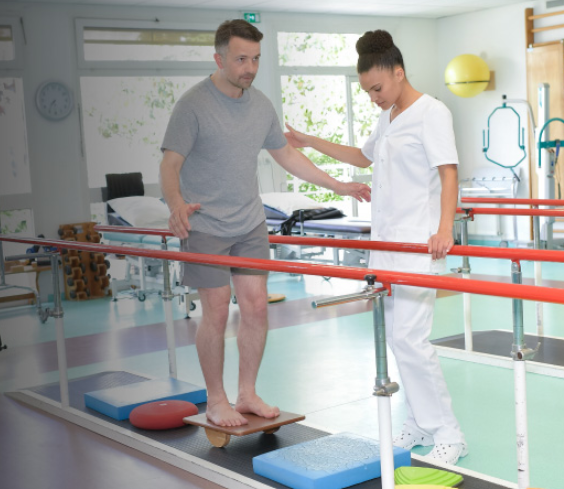
- Musculoskeletal & ergonomic stressors
- Manual patient handling and transfers
- Awkward postures at bedsides/workstations
- Repetitive tasks (specimen prep, keyboarding)
- Results: strains, sprains, low-back injuries, cumulative trauma
- Slips, trips, and falls
- Wet floors, cluttered corridors, rushing during emergencies
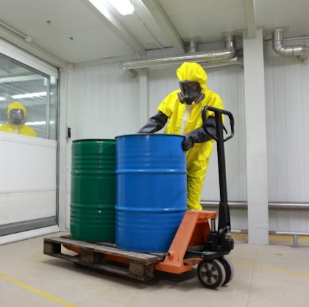
- Chemical hazards
- Disinfectants/sterilants (glutaraldehyde, formaldehyde, peracetic acid)
- Cleaning agents and anesthetic gases
- Latex allergens
- Chemo drug compounding/administration
- Physical agents
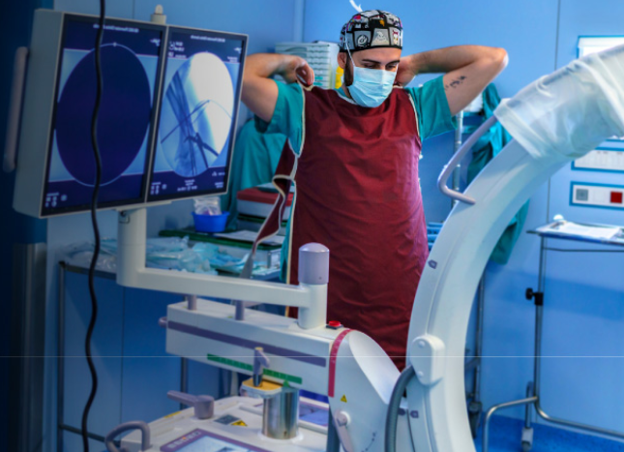
- Ionizing radiation (x-ray, fluoroscopy)
- Non-ionizing radiation (lasers)
- Noise (ORs/ICUs)
- Heat stress from PPE
- Workplace violence & aggression
- Patient or visitor verbal abuse and physical assault
- Higher risk areas: ED, psych, geriatrics, long-term care
- Psychosocial hazards
- Long shifts, understaffing, moral injury, burnout
- Compassion fatigue, sleep deprivation
- Other safety issues
- Fire/oxygen-enriched atmospheres in ORs
- Electrical hazards from medical devices
- Confined-space issues in labs/maintenance areas
Final Course Exam
After studying the course material and completing the knowledge check activities, students can take the course exam. The course exam is designed to test the student's understanding of the course material. Course exams are composed of multiple choice questions selected from our extensive question bank.
Exam Characteristics
- Exams vary in length, from 10 questions to 50 questions, depending on the course content. Most exams are 20 questions in length.
- You have two (2) hours to complete the course exam.
- The exam is open book. You can use course modules, review notes, or the course study guide to help answer questions.
- You must achieve a minimum score of 70% to pass the exam.
- You may retake the final exam if you fail to pass it:
- You may take an exam three (3) times within a 48-hour period.
- After the third attempt, students must wait 48 hours before attempting the exam again. During this time, you should review the course material to improve your understanding.
- When you pass the final exam, you may not retake the exam to raise your score.

BESTSELLERS