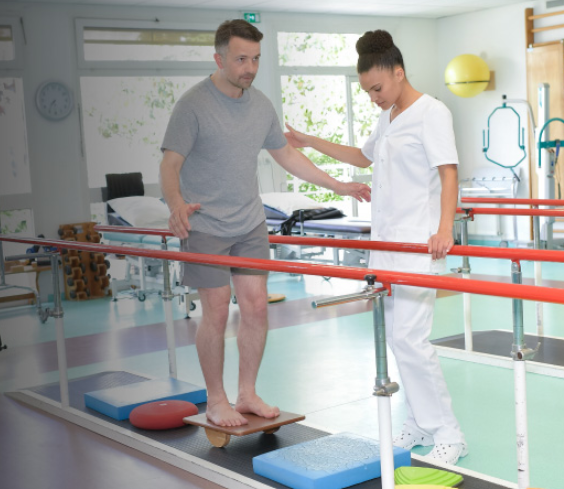
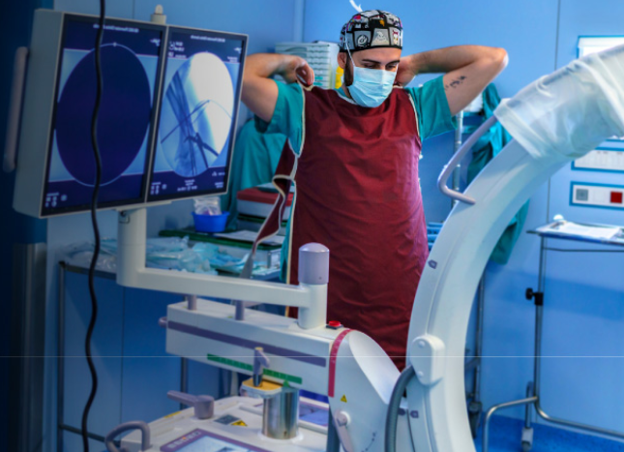
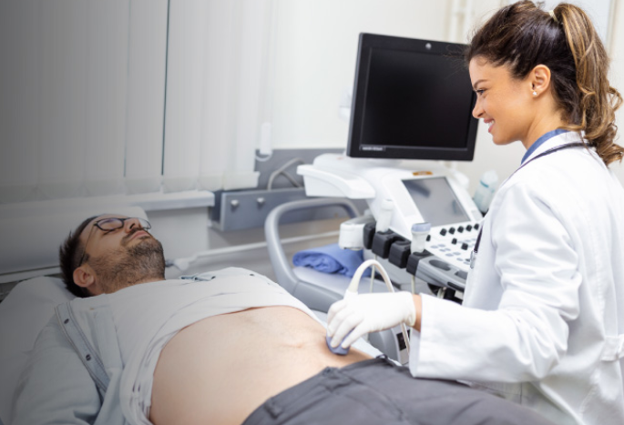
This 15-Hour Healthcare Hospital Safety Specialist program is specifically tailored for healthcare professionals seeking comprehensive safety training in a hospital setting. This program offers a deep dive into critical OSHA training topics, including OSHA bloodborne pathogens and hospital-specific safety hazards and challenges. By completing this program, you'll not only earn a training certificate but also enhance your understanding of OSHA healthcare training requirements. This program is essential for ensuring a safe and compliant environment in your workplace.
When you complete one of our training programs, you've completed a recognized certificate program. Our programs are designed to help educate employees, supervisors, and managers in various occupational safety and health topics.
If you are trying to transition into the safety and health field, then our programs will help you build a strong foundation in work-related safety and health. OSHA courses, such as the OSHA 10 and OSHA 30, only discuss rules and regulations. Our programs are designed to help teach supervisors and managers how to create effective safety and health programs within a company. If you are trying to break into the safety and health field, these are essential skills you will need.
Once you complete one of our training programs, you can list it on your resume under the category of professional development. We cannot say our programs will guarantee you a job in the OSH field; however, they certainly will help you build knowledge. Obtaining a job in the OSH field depends on several factors, such as your job aspirations, experience in the field and how well you interview.
Some colleges and universities, such as Columbia Southern University (an accredited university in Orange Beach, Alabama) grants credits for our 132-Hour OSH professional program. Additionally, some professions and organizations require individuals to meet CEU requirements which can be fulfilled by taking our training in many cases. You should always check with schools and other organizations to ensure they will accept our training.
Final Course Exam
After studying the course material and completing the knowledge check activities, students can take the course exam. The course exam is designed to test the student's understanding of the course material. Course exams are composed of multiple choice questions selected from our extensive question bank.
Exam Characteristics
- Exams vary in length, from 10 questions to 50 questions, depending on the course content. Most exams are 20 questions in length.
- You have two (2) hours to complete the course exam.
- The exam is open book. You can use course modules, review notes, or the course study guide to help answer questions.
- You must achieve a minimum score of 70% to pass the exam.
- You may retake the final exam if you fail to pass it:
- You may take an exam three (3) times within a 48-hour period.
- After the third attempt, students must wait 48 hours before attempting the exam again. During this time, you should review the course material to improve your understanding.
- When you pass the final exam, you may not retake the exam to raise your score.